Source Semi-Automatic Liquid Soap Filling Machine for Cosmetics, Cleaning, and Personal Care
Compare 30 semi-automatic liquid soap filling machine options featuring volumetric and piston types with digital panels. Buyers can evaluate capacities ranging from 40 to 3600 bottles per hour and fill ranges from 10ml to 25kg across various stainless steel models.
Key considerations
Products List

Semi Automatic Liquid Soap Filling Machine, Liquid Soap Bottle Filling Machine
$4750.00 - $5000.00
MOQ: 1 Pieces


Automatic Liquid Detergent Filling Machine Liquid Soap Filling Machine
$8000.00 - $35000.00
MOQ: 1 Sets


High Accuracy Automatic Bottle Filling Machine for Liquid Soap Shower Gel
$12000.00 - $19000.00
MOQ: 1 set


Automatic Servo Pressure Linear Type Shampoo Filling Machines Liquid Soap Filling Machine
$16000.00 - $20000.00
MOQ: 1 Pieces


Automatic Liquid Soap Filling Machine Capping Machine Detergent Lotion Bottle Filler
$8900.00 - $19620.00
MOQ: 1 Pieces

According to The Customer Detergent Lotion Liquid Soap Filling Capping Machine
$8900.00 - $19620.00
MOQ: 1 Pieces

According to The Customer Liquid Soap Lubricant Oil Filling Capping Machine
$8900.00 - $19620.00
MOQ: 1 Pieces

According to The Customer Liquid Soap 50ml 100ml Filling Capping Machine
$8900.00 - $19620.00
MOQ: 1 Pieces

According to The Customer Liquid Soap Automatic Bottle Filling Capping Machine
$8900.00 - $19620.00
MOQ: 1 Pieces


Comprehensive Sourcing Guide
Strategic Sourcing Guide for Semi-Automatic Liquid Soap Filling Machines
Understanding the Technical Landscape of Liquid Soap Filling Equipment
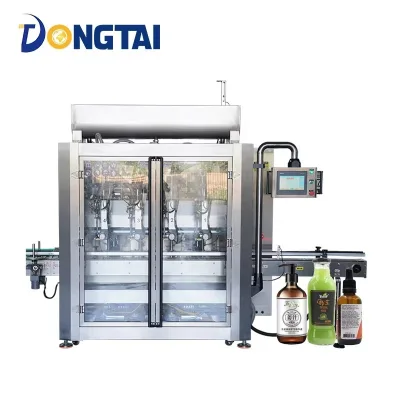
When sourcing a semi-automatic liquid soap filling machine, buyers must first distinguish between the broad category of automatic equipment and the specific operational requirements of semi-automatic systems. While the market data indicates a wide spectrum of capabilities ranging from fully automatic linear systems to specialized piston fillers, the semi-automatic segment often serves as a critical bridge for small to medium-sized enterprises (SMEs) seeking flexibility without the capital intensity of high-speed automated lines. The core technology for liquid soap filling generally relies on volumetric or piston-based mechanisms. The observed product attributes highlight the prevalence of "Plunger" dosing devices and "Piston Filling Machine" types, which are particularly effective for viscous liquids like liquid soap. These machines utilize a pressure-based filling principle, ensuring consistent output even when the product viscosity fluctuates slightly.
A critical technical differentiator is the filling range. The available data points to specific ranges such as 10-1000ml and 1L-5L (adjustable), as well as broader capacities up to 25kg. For liquid soap applications, the ability to handle a wide volume range is essential, as manufacturers often produce both small retail bottles and bulk industrial containers. The "Multi-Head" configuration is another significant feature observed in the market, allowing for increased throughput without necessarily requiring a fully automated conveyor system. Buyers should verify if the specific machine offers a "Single-Room Feeding" or "Multi-Room Feeding" structure, as this impacts the complexity of the supply line and the ease of switching between different soap formulations. Furthermore, the material composition is paramount; the industry standard for food and cosmetic contact surfaces is 304 Stainless Steel (SUS304) or higher-grade SUS316, ensuring resistance to corrosion from alkaline soap bases and facilitating rigorous cleaning protocols.
Compliance, Safety Standards, and Regulatory Verification
In the procurement of industrial filling machinery, compliance is not merely a formality but a prerequisite for operational safety and market access. While specific certification names are not universally listed in the provided product facts, buyers must rigorously verify that the machine adheres to international electrical and mechanical safety standards. The source voltage for these machines is typically a "Three-Phase Four-Wire System AC220V 380V," which requires careful verification against the local power grid infrastructure of the buyer's facility. Installing a machine designed for a different voltage or phase configuration can lead to catastrophic equipment failure or safety hazards.
Regulatory compliance also extends to the materials in contact with the product. The use of "304 Stainless Steel" and "Plastic" packaging materials must be verified against local food and cosmetic safety regulations. Buyers should request material certificates of conformity (CoC) to ensure that the stainless steel grade matches the specification and that any plastic components are food-grade. Additionally, the "Digital Panel" and "PLC + Touch Screen" control systems, often featuring brands like Siemens or Delta, must be compliant with local electromagnetic compatibility (EMC) directives. The "Buffer Tank" with "Level Controls" is a critical safety feature that prevents overflow and ensures consistent pressure; buyers must confirm that these sensors meet the specific safety standards of their region. Since the origin of these machines is predominantly "China," buyers should be aware of the specific export standards applied by the manufacturer and ensure they align with the import regulations of the destination country.
Cost Drivers and Total Cost of Ownership Analysis
The pricing for liquid soap filling machines varies significantly based on the level of automation, capacity, and material quality. The observed listed price range in the market spans from 500 to 36,000 USD. This wide disparity is driven by several key factors. First, the "Automatic Grade" of the machine is a primary cost driver; while the keyword focuses on semi-automatic systems, the market data shows a mix of "Fully Automatic" and "Automatic" grades. A semi-automatic machine typically costs less than a fully automatic linear system but may require more labor, which impacts the long-term operational cost. Second, the "Filling Speed" is a major determinant of price. Machines capable of 1200-3600 bottles per hour (bph) or those with "6 Nozzles" and high-speed capabilities command a premium over slower, single-head units.
The "Weight" of the machine, ranging up to 800 Kg, also influences shipping and installation costs. Heavier machines often require more robust foundations and specialized lifting equipment, adding to the total cost of ownership. The "Packaging" method, whether "Plywooden," "Wooden, Film Wrapping," or "Plywood Case," affects the protection level during transit and the associated freight costs. Buyers should also consider the "Customization" availability. While "Customization" is listed as an available attribute, bespoke modifications to the machine's structure, such as specific "Packaging Container Lifting Structure" or unique "Feed Cylinder" designs, will invariably increase the initial purchase price. Finally, the "MOQ" (Minimum Order Quantity) range of 1-10 sets suggests that while single-unit purchases are possible, bulk orders might offer better unit economics, though this should be weighed against the buyer's immediate production needs.
Typical Applications and Production Scenarios
The versatility of liquid soap filling machines makes them suitable for a diverse range of applications, from household cleaning products to industrial lubricants. The specific "Filling Range" of 500g-25kg and 10-1000ml indicates that these machines can handle both small consumer packs and large bulk containers. The "Type: Volumetric Filling Machine" and "Type: Piston Filling Machine" attributes suggest suitability for products with varying viscosities. Liquid soap, being a semi-viscous fluid, benefits from the precision of piston fillers, which can handle the product without introducing excessive air bubbles or foaming.
The "Capacity" of 1400 Bph or 1200-3200 bph depending on nozzle configuration highlights the machine's adaptability to different production scales. A facility producing premium, small-batch liquid soaps might utilize a machine with fewer nozzles and a lower speed to maintain high accuracy, whereas a high-volume manufacturer would opt for a multi-head system to maximize throughput. The "Accuracy" of "Less Than 1%" and "Quantitative Error" of 0.5% are critical metrics for cost control; overfilling leads to product loss, while underfilling results in regulatory non-compliance and customer dissatisfaction. The "Digital Panel" allows operators to easily switch between different product recipes, making these machines ideal for facilities that produce multiple variants of liquid soap, such as different scents or concentrations.
Supplier Evaluation and Technical Due Diligence
Selecting the right supplier requires a rigorous evaluation process that goes beyond the basic product listing. Buyers should prioritize suppliers who demonstrate a clear understanding of the "Semi-Automatic" classification and can provide detailed technical documentation. The presence of "OEM: Yes" indicates that the supplier is capable of customizing the machine to specific brand requirements, which is a strong indicator of technical competence. However, buyers must verify the "Control System" capabilities, specifically the integration of "PLC + Touch Screen" systems. A reputable supplier should be able to demonstrate the reliability of the control logic and the ease of use of the interface.
The "Structure: Linear" and "Feed Cylinder Structure" details are important for layout planning. Buyers should request 3D layouts or floor plans from the supplier to ensure the machine fits within their existing production line. The "Driven Type: Electric" specification is standard, but the supplier should provide details on the power consumption and the efficiency of the electric drive system. Additionally, the "Packaging" details, such as "Plywood Case" or "Wooden, Film Wrapping," should be evaluated for their ability to protect the machine during international shipping. Buyers should also inquire about the "prod_model" series, such as the "MH-02L" or "GP series," to understand the product lineage and the availability of spare parts. A supplier with a robust after-sales support network and a clear warranty policy is essential for minimizing downtime.
Quality Control and Long-Term Procurement Considerations
Quality control in the procurement of filling machinery extends from the initial inspection of raw materials to the final acceptance testing. The "Material: 304stainless Steel" and "Material: SUS304/SUS316 Stainless Steel" specifications must be verified through mill test reports. Buyers should conduct a visual inspection of the welds and surface finish to ensure there are no crevices where product residue could accumulate, which is a common issue in hygienic processing. The "Accuracy" and "Quantitative Error" rates should be tested under actual operating conditions with the specific liquid soap formulation to ensure the machine performs as advertised.
Long-term procurement considerations include the availability of spare parts and the ease of maintenance. The "Digital Panel" and "PLC" systems are complex electronic components that may require specialized technicians for repair. Buyers should ensure that the supplier provides a comprehensive manual and training on troubleshooting common issues. The "Standard" dimensions, such as "165015502200mm" or "180011502100mm," should be considered in the context of future expansion or facility reconfiguration. Finally, the "Customization" aspect should be leveraged to future-proof the investment; a machine that can be easily adapted to new bottle sizes or product types offers greater longevity and value. By focusing on these technical and operational factors, buyers can secure a reliable and efficient filling solution that meets their production goals.
FAQs
What is the typical filling speed for these machines?
The filling speed ranges from 40 to 50 bottles per minute for standard models. Higher capacity units can achieve speeds between 1200 and 3600 bottles per hour depending on the nozzle configuration.
Which material is used for the machine structure?
The machine structure is primarily constructed from 304 stainless steel or SUS304/SUS316 stainless steel. This material ensures corrosion resistance and meets hygiene standards for liquid soap production.
Can the machine handle different bottle sizes?
Yes, the filling range is adjustable to accommodate various sizes from 10 to 1000ml or 1L to 5L. Some models also support a broader range of 500g to 25kg for bulk packaging needs.
How accurate is the volumetric filling process?
The accuracy is typically less than 1% with a quantitative error of 0.5%. This precision is maintained using a plunger dosing device and a pressure-based filling principle.
What is the minimum order quantity for purchase?
The minimum order quantity is 1 set for most models. However, some suppliers may require a range of 1 to 10 sets depending on the specific customization and production requirements.
Is customization available for the machine design?
Customization is available for various features including the feed cylinder structure and packaging container lifting. Buyers can request specific dimensions or automated grade levels to fit their production line.
What control system is integrated into the machine?
The machine features a PLC plus touch screen control system, often using brands like Siemens or Delta. This digital panel allows for easy operation and precise monitoring of the filling process.